Trending

Wilkommen!

Congratulations to those of you who are growing through the exploration that comes of learning! In  The Tragedy of Hamlet, Prince of Denma...

Sunday, January 31, 2016

Narrative Essays: The Lego Style of Literature

I want to say, first of all, that I might be going outside the parameters set for this assignment.  The better part of my afternoon was spent completing make up assignments in my American History class and the routine of reading some things and answering some questions and then reading more things and answ...well, you get the point.  My brain is currently picketing in my head for “worker’s rights” and if it’s not too much to ask I’m going to tap into a different, less agitated, portion of my organic cpu to reflect openly about how I processed this information.
But, I’m going to reflect a little further back first.  When I was a lot younger than now, I got a lego table for a present.  Now if you were neglected a lego table as a kid, just know, it was a table.  I suppose I should also add that the tabletop was replaced by a lego board which translated to an imagination’s equivalent of paradise.
So, fast forward, however many years later, to about thirty minutes before I wrote this.  I’m reading about narrative essays, obviously, and I’m absorbing various methods and techniques I’ll need to be a writing maestro, but my mind constantly wanders back to the lego table.
It’s not as random as it appears I assure you.  The table itself is just a metaphor (shameless name drop) for the setting and scenery of your story.  The little lego people, the characters, of course, and every other lego exists to fill in the blanks.
Now here is where things get dicey.  Narratives are inherently true.  It would be unwise and lacking in ethics to pass off a piece of fiction as true, but what if I gave you a true lesson behind a semi-real story?  What if I bent the rules just a smidgen, or perhaps a lot more, to take you on a journey of my own self-discovery? I won’t, I promise, as I’ve already exceeded my word limit for this assignment, but mostly because it isn’t finished yet.
The answer, as with most things, lies somewhere in the middle.  For example, wrestling was one of the sports I participated in during high school.  My main method of progress was eating right, working hard, and always imagining a positive outcome.  Pretty lame narrative.  So, instead, I’ll use my mental lego board and add a villain with a complex backstory, create some tension between the two of us and leave you dangling until the ultimate climax where we battle it out like Rocky and Apollo.  I’d shoot in with a takedown so fierce the gym would explode from the force and the scene would fade out as I walked away, my foe defeated, with fiery explosions at my back.  The moral of the story: Eat right, work hard, and always imagine a positive outcome.

Saturday, January 30, 2016

Narrative Writing

          Narratives are a great communication tool and are great practice for writers looking to expand their horizons. I love how there's not just one right way to write a narrative, there's multiple structures and styles and the best part of it all is you can write about almost anything you can think of. Feeling adventurous? Write about the time you first got your drivers license and a full tank of gas. Or feeling sad? Write a memoir of your favorite childhood pet that "went away to live on a farm". I feel like narratives really tap into the personality of each individual writer. From an audience point of view, you can watch how the writers sentences flow, what type of language they use, the comparisons and metaphors they choose to throw in, and the creative(or uncreative) adjectives they dot their sentencing with. It's a great chance to see other writing styles than that of your own and learn a thing or two. From a writers point of view, a narrative is a great way to try out a new writing style you've been working on or maybe just get an important story off your chest. It's a great way to try out new vocabulary and really tap into your imagination when thinking of how to describe something in detail. Creating characters and storylines can even give you some insight into yourself, and how we as humans communicate and tell stories.

          A couple things I found most helpful reading chapters one and sixty-six were how chapter one really broke down and described in detail the process of getting a narrative together. Going over simple sequences or wether to build toward an epiphany really puts the bigger picture together. You can see the whole process rise and fall and decide what to include that's important and what you can take out of your story. Chapter one also brought to light for me how realizing who your audience is can make or break your paper and influence what you choose to write about. Chapter sixty-six was great in giving examples of the different types of narratives and using all different authors showing just how diverse a narrative can be, giving first timers some good ideas and outlines to get the flame sparked for their own writing.


Narrative

    A narrative is when you tell a story usually about something that happened to you or an event that happened.  We use narrative everyday in our life but we just don't’ realize. Like when we tell stories of what happened to us in the past for example waking up late for school or falling down the stairs and getting dirty. Everyone has at least one story or more to write. Chapter one talked about what is narrative and what to include in it.
While reading chapter one it was talking about some ideas you can add to narrative writing. Describing all the details like what do you see or what do you hear. Add every detail that happened in your story. Like was that day raining or snowing include every detail. However, when writing a narrative essay it doesn’t always have to be about you, it can be about anything you want to write about. Just remember you still need a plan and write down details. Brainstorm or get a paper out and write down so details or what happened in your story. One thing you can do is close your eye and image what happened that day, it will help you and bring some memories back that you forgot about.
           I hope this helps me to improve my skills as a writer. I want to try and use some of the tips that I learned from chapter one and use it on my next narrative essay assignment.

Strategies

In the book, How to write anything , in chapters 19-24 were trying to help us or guide us to be a better writer. They had different sections, like one section would talk about brainstorming or smart thinking. What the book was saying was really easy to understand because I learned some of the stuff in middle school and reading the chapters was like a review to me well some stuff.      
     Whenever I need to write an essay or something for English, I will come back to this book and take some tips out of it to help me. This book can help anyone with their writing. This book will help me success in my english class because it gives important information and it shows how to filled an assignment with great information. I wished I had this book in middle school because I was struggling with my writing. This book can help anybody who is having problems with brainstorming or coming up with ideas. With the books tips and information, now it makes an assignment look easier.

Friday, January 29, 2016

A Narrative to Get Hooked on!

I really appreciated how the first chapter broke down the important steps of a narrative, the parts you should include, and the importance of detail. Personally I love to read stories with a lot of detail, and i tend to write with a lot of detail. Often my poetry is more detail than anything else. I benefited from how the chapter broke down how to define a purpose and topic and how to really bring it out in a story. In my writing I aways struggle on making my purpose and topic clear and I struggle on building it up to make it seem important and defined. I always have a tough time with different audiences. I feel like I can only reach a certain audience, so I really appreciated the section about how to reach your audience and what the readers want. As a visual learner I thought the section about adding visuals was on point. I have always been a visual learner and enjoy seeing images with my readings not only because it's fun to see, but also because you can really connect with the reading and the emotions the author intended by the images the author chose to include. 

I benefited from all the examples in chapter 66 including the readings and the images. I struggle with writers block quite often and bringing able to view the flow of another narrative is a lot of help. The comic showed a great example of a way in incorporate images to your writing, in a way I didn't expects. Often when I think of added images to writing I think of just including pictures along the way. The last thing I would think of is showing your whole story through images. 


Both of these chapters were very helpful to me, and showed many ways that I can improve my writing to make it more attention catching, and interesting. 

Chop Suey

     I found these chapters very applicable. I have written a few narratives before but i could not recall too much information on writing narratives. After reading this text, I am confident that I have the ability to construct a well written narrative essay. Chapter one really helped me to understand the planning process for writing a narrative. I found the section "Creating A Structure" to be the most helpful for me. Too often I find myself flowing through paper and ending up off topic. This section shows me exactly what I need to keep structure in my essay without branching off. Another section I found significant was " Understanding Your Audience". It is very important to remember your audience when writing. If you know anything about the people who are going to be reading your paper, then you can capitalize on their emoting and opinions in your writing. This also makes the reading experience more enjoyable. The narrative reading in chapter sixty-six were great examples of narratives. I found the story "Chop Suey", by Ira Sukrungruang, very interesting. It was about a boy who went bowling with is mom and for the first time, and he realized she was a very good bowler. The visualization in this story is amazing. He used sentences like "the rumble of the ball on the floor", "the hollow explosion of the pins", and "the haze of smoke floating over the lane". This made me feel like I was their at the bowling alley in that moment. Overall this reading has prepared me for this narrative.

Narrative Skill

A Narrative is basically telling a story, or reflecting on an event in the past.  It is something that we do everyday that we may not always be aware of, but it is an important part of daily communication.  It can be as simple as remembering that time in kindergarten when you played a reindeer in the school play, or when you fell off your bike and wanted to share every scuff and scratch with your classmates.
    I found that chapter one discussed several helpful ideas to add to narrative writing.  
When adding to a narrative it is important to pay attention to detail in the story.  Having a vague non descriptive tale can be the downfall of any good story.  Telling all the details of what it looked like, what color you saw, whether the sun was shining or rain was pouring out of the clouds above is extremely important.  Painting a picture for anyone who may read your story can add to the quality of the final draft.    
Although narratives can be about anything that you feel like writing about it is still important to plan and think out your narrative.  Brainstorming is still a helpful tool, it can help you gather ideas to bring your story to life.  Listing can help to bring back details that you may have forgotten until you write them down on paper, and can help tie all the loose ends together.   The chapter also discusses the use of images to add depth to the story.  Images can help bring the story together, bring back memories, and add interest to your tale.  
   I am looking forward to using the skills that I learned  while reading these chapters to benefit my narrative. I hope to be able to use these to improve my skills as a writer and to add to the skills that I already have.   


Exploring the Narrative

            Personal narratives are meaningful stories of an individual’s life experiences.  We’ve all had or have challenging moments in life that test our morality.  However, what you do after those onerous times determine what kind of person you will be in life.  Writing narratives to me personally are healthy for the soul.
            In my experience, writing narratives have helped me overcome some emotional conflicts in the past.  I believe that writing a narrative allows an individual to relieve stress and maintain emotional stability.  We are always told that things in life happen for a reason.  Writing a narrative allows an opportunity to arise and express those reasons.  Releasing your inner conflicts in narrative writing can open your eyes to a more peaceful world.
            What I found most interesting in chapter 1 was; it doesn’t matter what class of life you were raised in.  Never be ashamed of where you came from.  Always appreciate what’s in front of you and never take things for granted.  Everybody has a unique experience that has occurred in their lives, and writing about those experiences matter.  Connect the dots to your timeline and let your story be heard.

            Reading chapter 1 has given me better understanding on narrative writing.  Every detail in writing matters.  Remember a time in life that was most precious to you and challenge yourself in narrative writing.  

Conquering Mt. Narrative!

    A narrative is something that we use in everyday life that most of us don't truly realize. Simply telling a story, from my day at school where I was unprepared for a quiz, my trip to the grocery store when I forgot my wallet, or the time I poured cereal in a bowl then realized I had no milk. Chapter 1 talks about many aspects of the narrative but brings forward a myriad of intriguing points.

    The section that truly caught my attention was about the use of the word “I” and how it should be used without apology. A narrative is truly a story from a specific person's perspective, thus “I” is used because you were there, you experienced all of it. Unlike many academic papers where a first person noun is discouraged and often punished for its usage a narrative offers a wider spectrum of writing as well a more natural feel where you are not forced to follow a strict rule sheet. This I believe allows us to write better papers whether for personal or academic use. Regardless I feel a narrative paper could be fun and also a great learning experience to help us all learn to truly improve out ability to use descriptive sentences to truly envelop the reader in the experience of the story that is your narrative.

Words Words Words

Words. Words on a page. Most people will just count them as just words on a page, but they are more than that. They are someone’s voice. They are someone’s story. 
Narratives are not just words on a page, they tell a life story, whether or not that be from real life experiences or not. In my reading of chapters 1 and 66, I learned that when writing narratives, you have to focus on making a clear and specific point. The point that you are trying to make should include a unique perspective on that personal or non personal topic. Also, a focus point when writing narratives is to understand your limits and boundaries with writing. For example, when choosing a topic, you need to choose a topic that is easy for you to explain and provide detail for. Another thing that I learned from chapters 1 and 66 is that when writing a narrative, you need to pace the story effectively. For example, you do not need to write the story too fast and lose the readers. 
Chapter 1 talks about not hesitating to use first person “I” which is different because I have always been taught not to use first person “I” in my writings. I think it is very interesting that there are so many ways that you can express your life experiences through narratives. I look forward to sharing my life experiences with others as well. 

Wordy stories vs. Funny stories


Anne of Green Gables is a phenomenal movie and most likely an incredible book if you can make it past Anne's musings. I’ve never gotten though the whole book, even though I generally do adore Anne’s character. She’s beyond descriptive and it has always disenchanted me. In Chapter 1 of How to write anything the author explores the power of setting a context and mood in a narrative. He points out the importance of giving readers a feel for the surroundings in your narrative while also holding back from lingering descriptions. How true is this? Before, I understood uncommonly wordy narratives would push me away yet didn’t realize this was because of the way the mood was set. I’m sure for some authors and readers loads of details are intriguing, but I have a difficult time with them.
Strong words are meant to be used. Words that are to the point and powerful. According to the book, it seems strong words tend to be less words, like excellent rather than really great. I think remembering to have descriptive and concise explanations will be a helpful.
My psychology teacher told us to be funny you have to be smart, which is why the first narrative in chapter 66 caught my attention. I actually laughed out loud while reading it. By the time I made it to chapter 66 my instinct was to absolutely not read all of the story, but I started and couldn’t stop. His humor made the serious subject of a teacher bulling her students bearable. The author had an upbeat attitude and kept me interested. His style of writing was enjoyable and one I hope to emulate in my narratives.
I definitely will be keeping our English book close while writing, it’s full of insightful and practical advice.
Narratives


There are great points that are shared throughout chapter 1. I find it very helpful at the fact

that some of the first main points shared are clear and easy to start off with. If you decided to write

a narrative, you tell a story, make a point, and observe details closely. Because of all the sections

and points I came across while reading chapters 1 and 66, I now have new and helpful notes that

will help me for when I write my next narrative. I am a visual learner so seeing and reading all of

the examples of narrative writing truly has already helped me have a better understanding. I did

not really realize that you could add so much visuality and imagery  into a narrative so I am excited

about learning and putting a little extra detail in that direction. Usually when I am told to write a

story or narrative or anything in that area, I create an idea of what I want to talk about make a tiny

outline and go with it. Now, with this book, and mainly these two chapters, I have something to go

by and something that will guide me through the writing process. If I have any questions and if I

am not sure about what comes next when writing, I can easily skim over these chapters for help

and guidance.


To Walk Through Someone Else's Shoes

    A narrative is a story or an account of events and/or experiences, whether true or fictitious. There are many different types of narratives, such as: reflective, memoir, graphic, and literate. Narratives can be expressed through words, photographs, songs, and films.
    I remember as a kid living in Atlanta, GA; my mother worked 3 jobs to provide for my sister and I. It was hard on her because my father wanted to run the streets most of the time. My sister is six years older than me but she raised me for awhile. We lived in these apartments referred to as "The Circle" because they literally looked like they were built around a cul de sac. My sister used to play with a girl by the name of Zoe. Zoe's mother was a photographer. She watched my ten year old sister take care of a four year old child. One day she began to take random pictures of us. The pictures illustrated us crossing the street, my sister combing my hair, cooking for us, bathing me, helping me with school work, and many more tasks. As a four year old, I didn't comprehend what she was doing. She eventually published all the pictures and had an album set up to where it was telling our story. I asked her, "Ms. Ruby what is this?" She responded, " It's your narrative, I'm telling you and your sister's story!" Many years went by and I still never understood what she meant until I got to middle school. Although, I didn't understand what she was trying to depict; It was interesting to see, even as a kid.
    I find it amazing that there are many ways to express yourself and display your life. With narratives you can tell your own story or someone else can. It elates me to learn more about narratives. I have been through a lot and I have seen a lot of things in twenty years that some have not seen in a lifetime. I truly look forward to sharing my trials and tribulations with others.

Learning the Narrative

                When thinking about narratives I am reminded of my grandmother. She has a gift for taking an everyday event, such as an afternoon walk, and turning it into a beautifully descriptive and captivating story. That’s the cool thing about narratives, they give you the opportunity to reflect on an event of meaning to you.
                While writing a narrative, the writer must keep in mind that although they probably know this story like the back of their hand, it is brand new to the reader. This gives you the opportunity to expand on the characters and setting of your story. Another important thing to pay attention to is the language and writing style used. I found this extremely interesting, the book says that your language is where your story gets its energy and texture. This made me consider even if using dialog, or a characters thoughts in the story, that it can change and shape the character completely.
                In the section “Trust your experiences,” it states that most people underestimate the quality of their own experiences. This is a good reminder to myself to not let that happen, but to think of all my experiences as if it’s the first time they happened. This is part of the beauty of narratives too, that you can take a story that might not seem so exciting and liven it up and tell it from a different perspective.

                I look forward to choosing an event and taking it step by step to bring it to life through words. It will be interesting to see how my perspective on my story might even change as I go through the writing process. Narratives are a great way to reflect back on events in your life, or to pass down stories to family and friends.

The Potter's Wheel

Friendship is a theme I would not typically find myself writing about.  Everybody seems eager to talk about it so why not look for templates less easily surrendered from the skull's network?  Yet, the theme is following me around this week.  In reading Ray Bradbury's Something Wicked This Way Comes, I found Bradbury recasting an old idea in a fresh way:  
So there they go, Jim running slower to stay with Will, Will running faster to stay with Jim, Jim breaking two windows in a haunted house because Will's along, Will breaking one instead of none, because Jim's watching. God how we get our fingers in each other's clay. That's friendship, each playing the potter to see what shapes we can make of the other.
And then, my sister caught our "fur babies" doing this:


Are you shaping anyone in your life?

Narratives


Narratives are pretty cool pieces of writing. They are personal but they come from a unique perspective from the writer. Narratives can describe basically every human activity.

During this reading I realized that the writer can reflect on a certain moment that caught their attention and then take a whole different track than what really happened. That is where the unique perspective can come into play. The writer can take any moment that was real or take a different path. Taking a different path they do whatever they want and make the story seem like it has an actual plot. When you are taking a different path, the writer needs to make sure that they stay on track. Which means they have to pick a specific event or multiple events in order for them to not ramble on.

I also found it nice to know that narratives can be therapeutic for some people. Anyone is able to get something off their chest if they need to. In narratives you can right about your family, friends, life, etc. I think this is a great way of dealing with problems. People do not have to talk, they simply start typing how they feel and get everything off their chest. Of course it has to stay on track but in my opinion, it would be easy to stay on track when you are getting your feelings or anything of your chest.

The last thing is very helpful for me. Details help the narrative to become memorable. The more the details the more life is brought into the story. When I write, I tend to leave out details because I get distracted or I do not remember them. So when I am writing I need to remember what I observed and then write about it. Remembering what I observed will help bring my story to life and hopefully get the reader's attention. As our first narrative is coming up, I am curious to see what I am going to choose to write about. Whether it be personal or go a different path and make the story sound like an actual plot.

Thursday, January 28, 2016

Narratives! Narratives! Narratives!

Writing to many people is a good way to get their thoughts out or either to simply tell a story. Personal narratives is my favorite style of writing beyond any-other styles. In How To Write Anything, it gives many good tips on how a writer can improve their narratives. Narratives to some people can be very therapeutic or a good way to get things off their chests. With personal narratives specifically, you are open to anything you want to write about. Many find personal narratives to be the easiest style of writing, and I couldn’t agree anymore!

With narratives, a writer needs to make sure their topic is manageable. I never really have thought about making sure the topic I’m writing about is manageable, but I now understand. You need to make sure your topic is manageable because you want to make sure your readers can relate and share similar experiences somewhat, if you are going to publish your writing. Another good tip that is important to think about when writing personal narratives, is that you should most definitely use images to help tell the story. With that being said though, you should still go into detail about what your story is about. I never have really thought about using images when writing personal narratives, because past teachers have told me not to include images. It makes much more sense, because it creates a picture in the reader's head to build around with the details also in your writing. And who does not like pictures in books?

Have you ever thought that writing something that’s been bothering you, might help you get past it? Writing can help you get over something that’s been troubling you, or it can help get something you’ve been wanting to say for years finally out. I find myself to write a lot when something is troubling me. Actually writing with pen and paper helps many people to get their thoughts out. Personally I would rather sit down and write about my troubles, rather than talking to anyone about them. Narratives are best known for being the style of writing that writers write to get things off their chest. Writing stories about a loved one who passed away, can be very therapeutic to many after they lose someone they loved dearly. Writing is a very therapeutic activity that I love to do when I have free time. It helps me escape this crazy world, and it lets me enter my own world.

Writing is a very relaxing activity, that more people should partake in. Many people in today’s society would rather share special moments through social media like Instagram. Though it is very fun to post pictures and have your friends like your pictures, it’s more fun to actually get to read a full story about someone’s experience with something. Writing is fun and you don’t have to be a professional at it to enjoy it!


Becoming a Better Writer


Reading the first few chapters of “How to Write Anything” opened my eyes to many new things. Such as, not agreeing on a good idea too soon when you are in a group. Further the discussion and listen to other ideas. At points you can even argue why another idea is better. Also setting time limits to brainstorm so you can focus better.

Learning that setting a time for brainstorming, helps me out a lot because I tend to get off subject easily. Setting a time will help me become more productive and to stay focused. Also, when I am brainstorming I need to begin writing down all of my ideas, reasons behind them and why I chose the topic. Using these tactics, I need to include making an agenda for my brainstorming which will be very helpful for deadlines/due dates.

Another topic that I found helpful was the smart reading. I tend to either not read, skim over the reading or read the passage and not really engage myself. Finding new information will be helpful in many ways. I will be able to further my knowledge in a topic that I am familiar with or something that I have experienced that is similar to someone else. Reading an article or passage that you are familiar with can open your eyes to new things even though you know the topic pretty well. You always need to read with an open mind so you can gather more information. The biggest thing for me is that I need to begin to interact with my reading so I am able to understand more. Which means putting all electronics up and being in a quiet place.

Reading this book has already opened me to so many new tips about writing. I am excited to see how much more I will learn and how I will improve as a writer while reading this book.


Enhancing Writing


Writing is a challenging talent that many people yet possess. With practice and hard work, ordinary writers can become extraordinary writers. Taking the time to plan, organize research, and thoughts are vital in writing. Procrastination is a big NO when it comes to writing assignments.


Brainstorming to me is the most beneficial tactic in collecting ideas on how to write about something. Being in groups bring more creative ideas, rather than brainstorming alone. Every author that publishes a book or novel brainstorms on what he or she wants to write about. First rule in brainstorming is to enumerate and then assess the topics. Once you gather all information, plan and organize your topics.


In “How to Write Anything”, critical thinking caught my attention. Nobody likes to have their work critiqued, but it’s necessary to make adjustments. Support your writing with facts and not assumptions. It takes a lot of mental focus to really capture the reader’s attention. Applying this information will allow me to gather enough facts on future reports.


It can be very overwhelming at times to write about something you find no interest in. Following simple steps such as: Brainstorming or critical thinking about something can enhance your skills as a writer. Remember practice makes perfect! (No such thing as perfection)

Wednesday, January 27, 2016

Learn to Write

     Not knowing where to start when it comes to writing can be a pain. For me the hardest part is coming up with what to write about. From there it doesn't get much easier. luckily there are some very simple steps you can take to help.
     when you wait till the last minute to start writing, the best starting point is to brainstorm. make a list of things that interest you. Once you have a couple good topics down, make points about each one, they can be as specific or generic as you want. As long as you're starting to have something on paper.
     After having a few ideas down with some points to go along with each you can start to try and write about one of them. I usually like to go on the internet and see which one of my topics has the most useful information on it. It might help to make a visual outline of the information you have gathered.
     With your ideas on paper and a visual outline, you are now ready to start writing. If writer's block hits you, you can always ask a peer for a little help. Don't let them write for you but brainstorm with them. Talk about ideas and get a different opinion on your work.
     Now its time to start your first draft. Take this information and do the best you can. good luck!

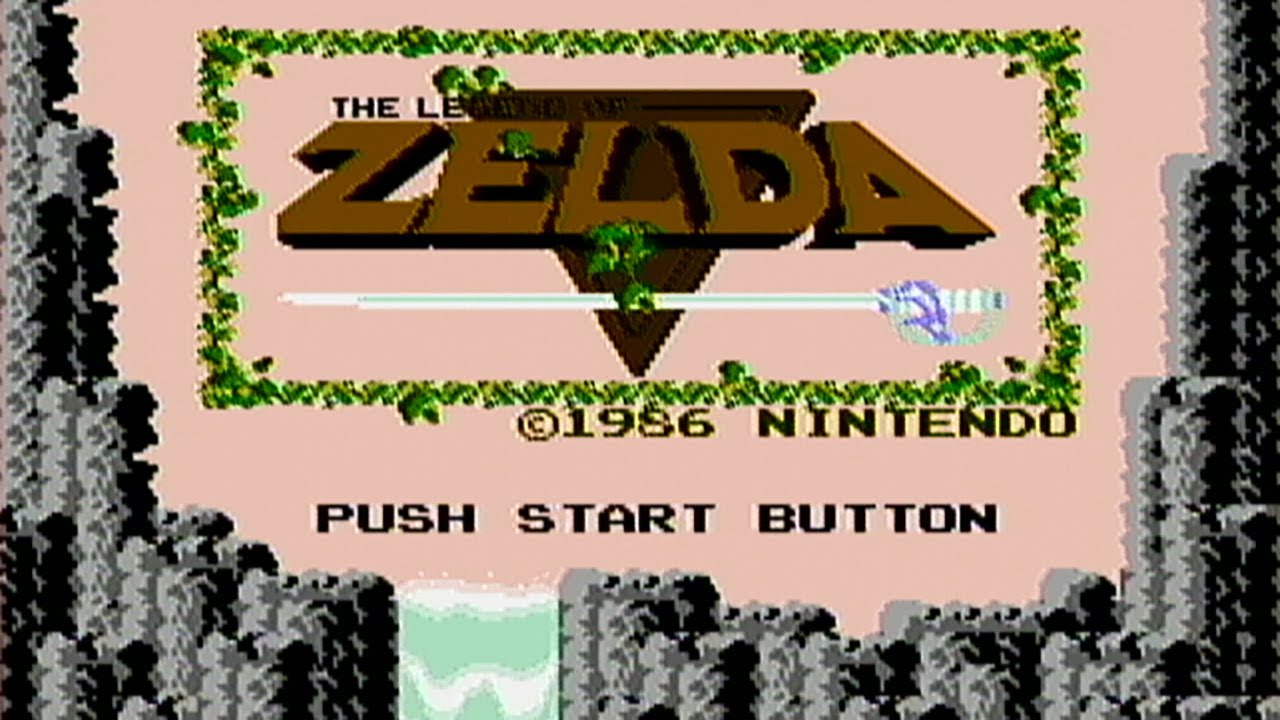
“It’s dangerous to go alone. Take this!”: Lessons in Teaching Learned from The Legend of Zelda

Since my first sojourn through the Lost Woods of the original The Legend of Zelda, debuted on the Nintendo Entertainment System in 1986, I have been an acolyte of the hero known simply as “Link.” I suppose most girls would have preferred to be the Princess Zelda, primping somewhere in Hyrule Castle (spoiler alert: Zelda hates primping too and prefers to assist Link behind the disguise of various identities), but I have never questioned my path as a hero of the Triforce. Whereas many are aware of the adoration I hold for this video game, no one realizes that the literacy I wield in this game has been vital in helping me to achieve success in my career. Being a professor of writing overlaps
with the knowledge gained over decades of “LOZ” fandom.

The Legend of Zelda has impacted my life in many surprising ways but none more needed than in its application to my teaching career. I know. No one familiar with Link is impressed at his professorial mien. The guy does not even seem possessed of a voice with which to profess. Yet, it is not so much in the standard hero story that the clues to teaching are found as in the setup of the game itself. The Legend of Zelda is designed as the perfect learning experience. In the well- received Everything Bad is Good For You, Steven Johnson, regarded media theorist, describes “telescoping,” an important problem- solving skill that is inherent to The Legend of Zelda games: 

I call the mental labor of managing all these simultaneous objectives “telescoping” because of the way the objectives nest inside one another like a collapsed telescope. I like the term as well because part of this skill lies in focusing on immediate problems while still maintaining a long­ distance view.   (54)
What Johnson is referring to is recognizing a problem, more commonly called a puzzle in video games, and recognizing the steps it will take to reach the objective of that puzzle. For instance, I recall in the Wii exclusive, The Legend of Zelda: Skyward Sword, the first objective to reunite with Link’s missing companion, a giant red bird called a “Loftwing.” Immediately, one sees a series of steps to reaching that “long­ distance view”:
the player is going to have to get information about where the Loftwing is and obtain resources to help in reaching the Loftwing. Upon gathering intel, it becomes clearer that the player needs a sword to cut down an obstacle on the path to where the Loftwing has been imprisoned. Moving forward, further steps are nested within these goals: to get past the town bully in order to reach the place where the sword is held and to then prove that one can use the sword by cutting down a series of practice dummies. What was originally one overwhelming goal is now a list of more clearly defined steps.

With telescoping comes another vital learning skill called “probing.” Johnson addresses this idea, but it is originally defined by James Paul Gee, an expert in pedagogy who focuses on the applications of technology to learning. In his book What Video Games Have to Teach UsAbout Learning and Literacy, Gee describes the healthy approach to problem solving present in most video games as a cycle: “probe, hypothesize, reprobe, rethink” (90). If probing is the key to being an intelligent gamer and learner, then I have discovered my hidden genius. I say this because most of what I love about The Legend of Zelda games is exploring the environs and talking to the non-­playable characters (NPCs) about what issues they need me, Link, to solve. What is this shivering bush over here? Oh, my, certainly is lush and even cute. Perhaps I’ll find some berries to refill my health gauge! Wait, OMG, why are you shooting giant peas at me, cute bush? That f**king hurts! Die, you pretentious
little rotten pile of leaves, die! Oh, now, what is this? Deku nuts!? Wonder what these do? This little internal monologue indicates the probing cycle that may have gone through my mind when I first encountered a “Deku Scrub,” a common enemy first encountered in The Legend of Zelda: Ocarina of Time. First sighting the Deku Scrub was the first probing, while imagining that it might yield healing berries was a hypothesis based on previous experiences with video games in which bushes provided some kind of health boon. To test the hypothesis, I had to engage with this mysterious denizen of The Legend of Zelda universe, which quite rapidly required me to rethink that hypothesis. The cycle returned to probing when I had to figure out how I might use the Deku nuts picked up after slaughtering the minion.

So what does the literacy of rescuing Loftwings and battling Deku Scrubs offer to the career of teaching? By creating lesson plans and conducting class activities with telescoping and probing in mind, I am able to break learning down into digestible and engaging steps. Take the potentially mind­numbing lesson of learning to be more descriptive in writing. Setting this as the “long ­distance view” for my students, I provide an activity in which students are given a set of items. Each item emphasizes one of the senses through which description is born: a pine cone for the tactile sense, a sachet of lavender for smell, wind chimes for sound, a photograph for sight, and a much ­needed sugar boost of M&Ms or Jolly Ranchers for taste.

I ask students to begin probing description (I assure you I do not use that particular term in their presence) by listing words that describe each of the items. They begin with simple words like “brown, spiky” for the pinecone, hypothesizing that I want general ways of describing the items. However, once they are done with their initial list, I force them to reprobe the items by having them add to the lists without repeating anything they have already listed. Feeling tapped out, a student may gasp at me with exasperation, but a stony and mischievous glance indicates that I wish for my students to figure this challenge out for themselves. With a little team brainstorming, someone might say, “Another word for brown is dirt-­colored.” Clumsy but he gets the idea. He has rethought his approach. With further work, eventually students are using similes and other figurative language to describe these particular items. The enterprising student quickly begins to telescope her objectives by thinking about how the activity will apply to the Narrative Essay assignment that is due in a week. Thus, thanks to the problem-­solving skills practiced in The Legend of Zelda, I am able to both participate in and implement problems that require telescoping and probing, vital skills that students will carry with them to their careers, even if they do not know a Triforce from a secret symbol of the Illuminati.

Knowledge is best when it comes from unlikely sources. Afterall, Einstein’s vital Theory of Special Relativity was brought about by imagining what it would be like to ride a beam of light (Norton). The take away of my experience is that critical thinking is not learned best in classic classroom situations. Yet, neither is critical thinking gained solely by playing video games. There is the sweet spot between work and play that allows the true student to learn at any given moment in life. The teachers may be unlikely, the path dazzled with pixelated inspiration.

Sources

Gee, James Paul. What Video Games Have to Teach Us About Learning and Literacy. 
Johnson, Steven. Everything Bad is Good For You.
Norton, John D. “Chasing a Beam of Light.” Einstein’s Pathway to Special Relativity.


My Journey to Becoming A Better Author

In Dolmage and Ruszkiewicz's, "How To Write Anything", discusses many different topics to become a better writer. While reading chapters 19-24, I discovered many different techniques of writing, how to work well in groups, how to overcome writer's block, and so forth and so on.
Chapter 19 discusses brainstorming. Brainstorming is a conference technique of solving specific problems, amassing information, stimulating creative thinking, developing new ideas, etc., by unrestrained and spontaneous participation in a project or discussion. Brainstorming is the first step of the writing process. It helps you determine a plot and/or a main idea. It gradually leads you to other ideas, questions, or similar topics which creates a full paper.
In the following chapter, brainstorming with others is discussed. Brainstorming with other has common interests as just brainstorming. What differs the two from one another is self explanatory. Brainstorming with other demonstrates how to work well with groups on activities. When brainstorming with others you have to first pick a leader. Make sure it is someone who is not timid, who can really take control of the situation. Then you will proceed to follow the necessary steps to working well with others. Set goals and create an agenda, set time limits, encourage everyone to participate, only give constructive but yet encouraging criticism, test all ideas, keep records, and last but not least agree on one topic!
The next several chapters discusses: Smart reading, critical thinking, experts, and writer's block.
These are very  brief subjects. Smart reading is used to broaden your horizon, expand your vernacular, and increase you knowledge (whether it increases your knowledge on a topic you are familiar with or if it teaches you something new.) Next, you have critical thinking. Critical thinking helps you acknowledge claims and reasoning. During critical reading, you are able to determine clear objections and it also helps depict logical fallacies. The chapter on Experts, is demonstrating different ways to use your resources around your environment, such as: asking your instructor, using the writing center, discovering local experts, asking a friend, or asking a librarian. Finally, something everyone is familiar with, writer's block. Writer's block hasn't been diagnosed as a medical condition yet, but it is usually a temporary condition in which a writer finds it impossible to proceed with their writing topics or discussions. It is discussed in the chapter many ways to handle it, for example: limiting distractions, writing a zero draft, and determining the parts you are interested in first. Those ways are all beneficial but I believe if you follow chapters19-23 leading up into chapter 24, those are great solutions as well.

How to Write Good...A Work in Progress

I have a love/hate relationship with brainstorming.  My brain, inflicted or blessed with ADD, seeks to accomplish tasks as quickly as possible with little regard to the quality of my work.  So I hate brainstorming because it’s an obstacle to finishing my chores.  But, in all honesty, when I’ve seriously done it, as opposed to filling out an outline of my finished paper to hand in as “brainstorming”, the quality of my writing has exploded to new heights.  
Particularly most useful in my reading was how to effectively manage a group brainstorming session.  From experience alone I know there will be a lot of collaboration in my future and a breakdown of how to work in a group setting in an intellectual level will be helpful moving forward.
Having taken a break from college to pursue a professional career, I had lost sight of reading in general.  Growing up I always wondered why my folks never sat down and read a book, but when I joined the 50 hour a week grind with the rest of the working folk I quickly realized why.  Hopefully with a renewed dedication to my education I will recapture the joy of reading or at least do it because it’s important.  As emphasized in our book, reading is essential to acquire the tools to write.
Perhaps the most useful information was dedicated to being a “fair” and “open minded” writer.  Being a person who loves to argue, a flaw maybe, I dunno, I have often relied on fallacies in an attempt to win an argument.  Hopefully, with some practice, I’ll get to where I can clearly get my point across as well as respond to criticism without resorting to old tricks.  
Brainstorming Writing Techniques
In each chapter of the book, How to Write Anything, there were descriptive sections and visuals that were helpful to tell or guide you to the next piece or selection. In each chapter (19-24), whether it was Brainstorming, Brainstorming with Others, Smart Reading, Critical Thinking, Experts, or Writer’s Block, they included sections to tell you what was up next. The chapters and sections both were very easy for me to read and I could easily understand the point they were trying to get across. I understood what I was reading and I believe that was most helpful to me.
The next time I have a writing assignment to complete, this book is truly something that I can come back to for a strong reference and receive the best tips on how to brainstorm, write, and finish an assignment. This book clarifies, helps, and directs you to a successful writing project. I truly wish I had this book during my previous english classes. This book is an important tool and it shows you how to create an assignment filled with needed information. The book makes the assignment easier on the person writing and is a major key to successful writing.