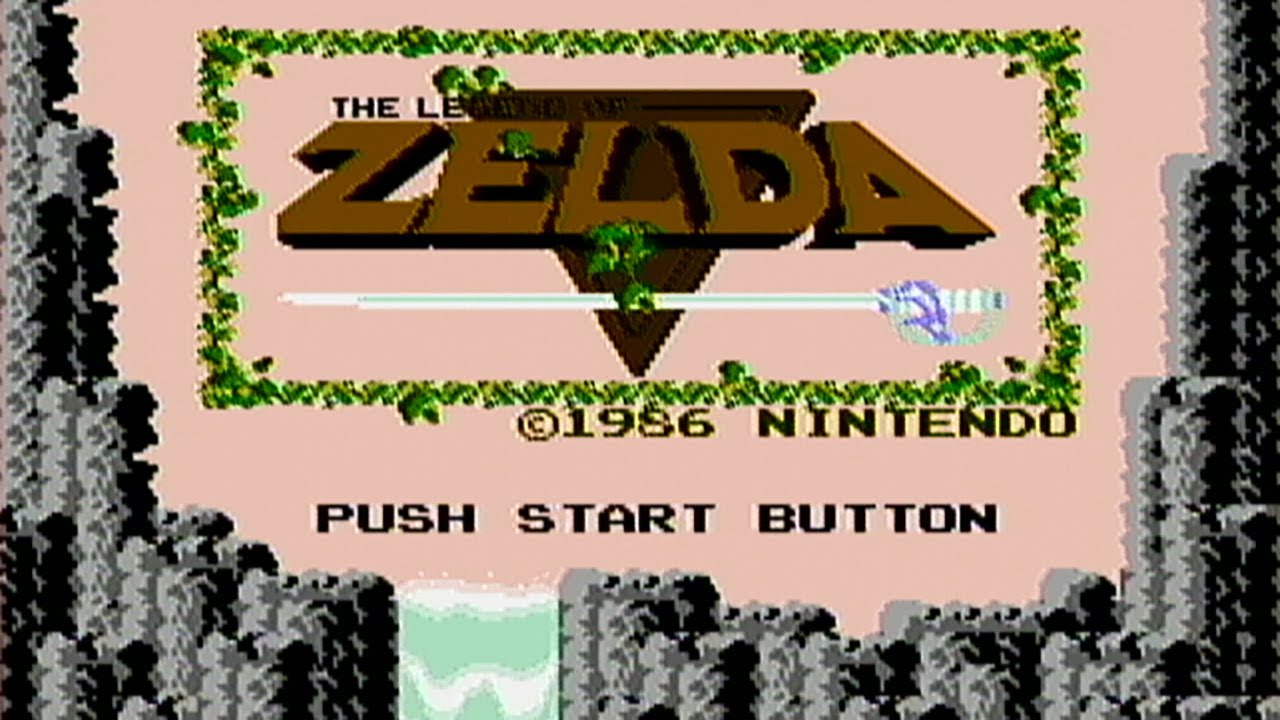
The Legend of Zelda has impacted my life in many surprising ways but none more
needed than in its application to my teaching career. I know. No one familiar with Link is
impressed at his professorial mien. The guy does not even seem possessed of a voice with which
to profess. Yet, it is not so much in the standard hero story that the clues to teaching are found as
in the setup of the game itself. The Legend of Zelda is designed as the perfect learning
experience. In the well- received Everything Bad is Good For You, Steven Johnson, regarded media theorist, describes “telescoping,” an important problem- solving skill that is inherent to The
Legend of Zelda games:
I call the mental labor of managing all these simultaneous objectives “telescoping” because of the way the objectives nest inside one another like a collapsed telescope. I like the term as well because part of this skill lies in focusing on immediate problems while still maintaining a long distance view. (54)What Johnson is referring to is recognizing a problem, more commonly called a puzzle in video games, and recognizing the steps it will take to reach the objective of that puzzle. For instance, I recall in the Wii exclusive, The Legend of Zelda: Skyward Sword, the first objective to reunite with Link’s missing companion, a giant red bird called a “Loftwing.” Immediately, one sees a series of steps to reaching that “long distance view”:

With telescoping comes another vital learning skill called “probing.” Johnson addresses this idea, but it is originally defined by James Paul Gee, an expert in pedagogy who focuses on the applications of technology to learning. In his book What Video Games Have to Teach UsAbout Learning and Literacy, Gee describes the healthy approach to problem solving present in most video games as a cycle: “probe, hypothesize, reprobe, rethink” (90). If probing is the key to being an intelligent gamer and learner, then I have discovered my hidden genius. I say this because most of what I love about The Legend of Zelda games is exploring the environs and talking to the non-playable characters (NPCs) about what issues they need me, Link, to solve. What is this shivering bush over here? Oh, my, certainly is lush and even cute. Perhaps I’ll find some berries to refill my health gauge! Wait, OMG, why are you shooting giant peas at me, cute bush? That f**king hurts! Die, you pretentious

So what does the literacy of rescuing Loftwings and battling Deku Scrubs offer to the career of teaching? By creating lesson plans and conducting class activities with telescoping and probing in mind, I am able to break learning down into digestible and engaging steps. Take the potentially mindnumbing lesson of learning to be more descriptive in writing. Setting this as the “long distance view” for my students, I provide an activity in which students are given a set of items. Each item emphasizes one of the senses through which description is born: a pine cone for the tactile sense, a sachet of lavender for smell, wind chimes for sound, a photograph for sight, and a much needed sugar boost of M&Ms or Jolly Ranchers for taste.
I ask students to begin probing description (I assure you I do not use that particular term in their presence) by listing words that describe each of the items. They begin with simple words like “brown, spiky” for the pinecone, hypothesizing that I want general ways of describing the items. However, once they are done with their initial list, I force them to reprobe the items by having them add to the lists without repeating anything they have already listed. Feeling tapped out, a student may gasp at me with exasperation, but a stony and mischievous glance indicates that I wish for my students to figure this challenge out for themselves. With a little team brainstorming, someone might say, “Another word for brown is dirt-colored.” Clumsy but he gets the idea. He has rethought his approach. With further work, eventually students are using similes and other figurative language to describe these particular items. The enterprising student quickly begins to telescope her objectives by thinking about how the activity will apply to the Narrative Essay assignment that is due in a week. Thus, thanks to the problem-solving skills practiced in The Legend of Zelda, I am able to both participate in and implement problems that require telescoping and probing, vital skills that students will carry with them to their careers, even if they do not know a Triforce from a secret symbol of the Illuminati.
Knowledge is best when it comes from unlikely sources. Afterall, Einstein’s vital Theory of Special Relativity was brought about by imagining what it would be like to ride a beam of light (Norton). The take away of my experience is that critical thinking is not learned best in classic classroom situations. Yet, neither is critical thinking gained solely by playing video games. There is the sweet spot between work and play that allows the true student to learn at any given moment in life. The teachers may be unlikely, the path dazzled with pixelated inspiration.
Sources
Gee, James Paul. What Video Games Have to Teach Us About Learning and Literacy.
Johnson, Steven. Everything Bad is Good For You.
Norton, John D. “Chasing a Beam of Light.” Einstein’s Pathway to Special Relativity.

No comments:
Post a Comment